
Home›Fertility› Micro-TESE
When No Sperm Shows Up in the Semen, Micro-TESE Surgery in Turkey Can Still Find Sperm Inside the Testicle
Around 1 percent of all men, and 10 to 15 percent of infertile men, have no sperm at all in their semen. In many of them the testis still makes sperm in small, scattered pockets. Micro-TESE uses an operating microscope to find those pockets, and retrieves sperm in about half of men with non-obstructive azoospermia, enough for IVF with ICSI and a biological child. In Turkey, Micro-TESE is performed as a day case, with sperm frozen on site.
Micro-TESE at a Glance
| Used for | Non-obstructive azoospermia, Klinefelter syndrome |
| Anaesthesia | General or spinal |
| Operation time | About 2 to 3 hours |
| Hospital stay | Day case, occasionally one night |
| Sperm found | About 40 to 60 percent overall |
| Back to desk work | 3 to 5 days |
| Sex and exercise | After about 2 weeks |
| Sperm use | ICSI, fresh or frozen |
What Is Micro-TESE?
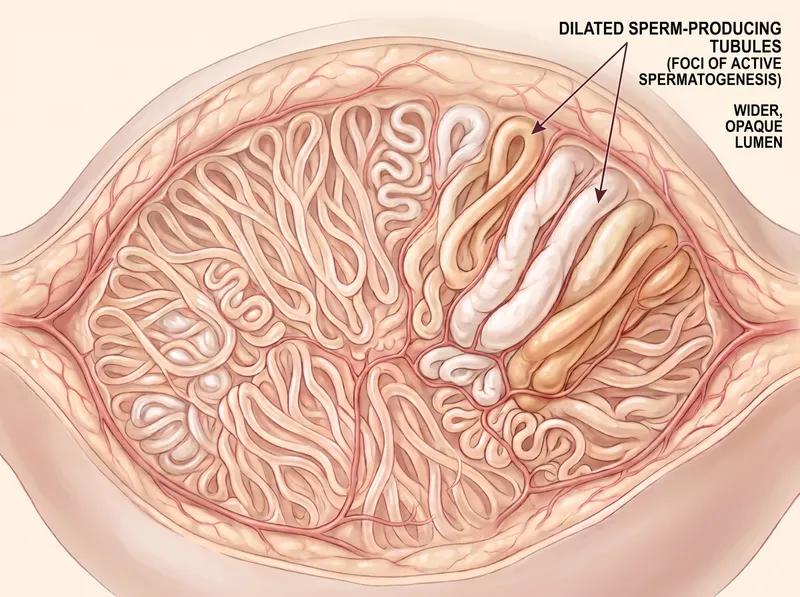
Micro-TESE stands for microdissection testicular sperm extraction. It was introduced by Peter Schlegel in 1999 for men whose testes make very little sperm. Instead of taking random biopsies, the surgeon opens the testis and examines the seminiferous tubules, the fine coiled tubes where sperm is made, at 15 to 25 times magnification.
Tubules that still make sperm tend to be wider, whiter and more opaque than empty ones. Only these are removed, often pieces smaller than a grain of rice. Blood vessels on the surface of the testis are seen and spared, which protects the testosterone-producing tissue and lowers the risk of bleeding and scarring.
Obstructive and Non-Obstructive Azoospermia
- Obstructive azoospermia: sperm production is normal but the ducts are blocked, for example after vasectomy or infection. Sperm is easily retrieved with a needle (TESA or PESA), and Micro-TESE is rarely needed
- Non-obstructive azoospermia: the testis itself makes very little sperm. This is where Micro-TESE gives the best chance
Who Needs Micro-TESE?
- Men with non-obstructive azoospermia confirmed on at least two semen analyses, including a centrifuged sample
- Men with Klinefelter syndrome (47,XXY)
- Men with an AZFc deletion on the Y chromosome
- Men with a history of undescended testicles, mumps orchitis, chemotherapy or radiotherapy
- Men in whom TESA or conventional TESE found no sperm
- Men with cryptozoospermia, where only a few sperm appear occasionally in the semen, if ejaculated sperm cannot be used
Small testes and a high FSH level do not rule surgery out. Neither predicts reliably whether sperm will be found, so they should not be used as a reason to go straight to donor sperm.
Tests Before Surgery
| Test | Why it matters |
|---|---|
| Two semen analyses | Confirms azoospermia, including a spun-down sample |
| FSH, LH, testosterone, oestradiol, prolactin | Separates obstruction from low production; guides hormone treatment |
| Karyotype | Detects Klinefelter syndrome and other chromosome changes |
| Y chromosome microdeletion (AZF) | Complete AZFa or AZFb deletions mean sperm will not be found |
| Scrotal ultrasound | Testicular volume, varicocele and hidden masses |
| Previous biopsy reports | The strongest single predictor of success |
Men with a complete AZFa or AZFb deletion should not have Micro-TESE. Testicular sperm has not been found in these deletions, so the operation would bring risk without any chance of success.
Hormonal Preparation
When testosterone is low, some men are given clomiphene, an aromatase inhibitor or hCG for three to six months before surgery to raise the testosterone level inside the testis. The evidence for this is mixed and it is decided case by case. Testosterone gel or injections must be stopped, as they shut down sperm production.
Micro-TESE, Conventional TESE and TESA
| TESA | Conventional TESE | Micro-TESE | |
|---|---|---|---|
| Technique | Needle, blind | Open, random biopsies | Open, under microscope |
| Best suited to | Obstructive azoospermia | Obstruction, mild production problems | Non-obstructive azoospermia |
| Sperm found in NOA | Lowest | About 35 percent | About 52 percent |
| Tissue removed | Small | Larger | Smallest for the area searched |
| Complications | Rare | About 3 percent | About 1 to 3 percent |
The comparison figures come from the Bernie 2015 meta-analysis of 15 studies. American (AUA/ASRM) guidelines recommend Micro-TESE for non-obstructive azoospermia; European (EAU) guidelines accept either technique, with Micro-TESE preferred where the expertise is available.
How the Operation Is Done
- Your partner's IVF clinic is informed in advance, and sperm freezing is arranged with the laboratory.
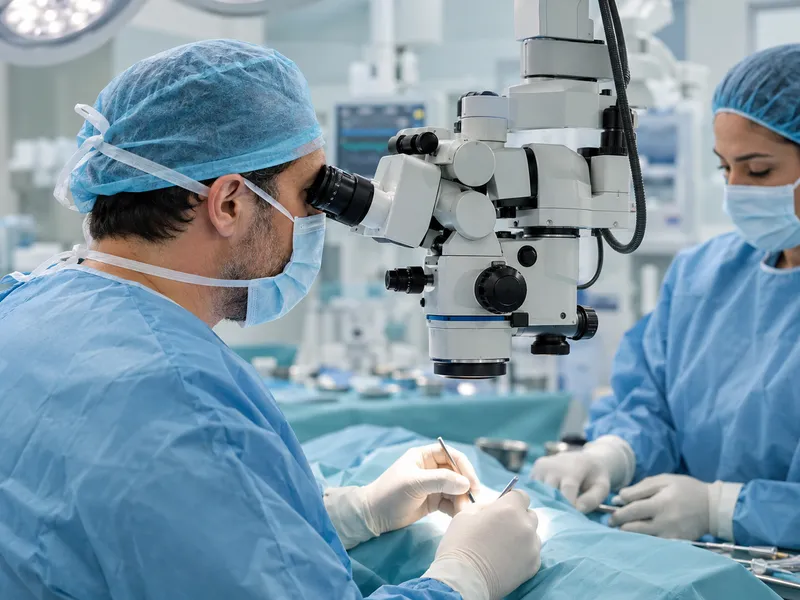
- Under general or spinal anaesthesia, a small midline cut is made in the scrotum.
- The testis is opened along its equator, avoiding the surface blood vessels.
- The surgeon searches the tubules under the microscope and removes only the dilated, opaque ones.
- An embryologist in theatre breaks up each sample and looks for sperm. The search continues across the testis until sperm is found or all areas have been examined.
- If none is found on one side, the other testis is searched during the same anaesthetic.
- The testis and scrotum are closed with dissolving stitches. Any sperm found is frozen in several straws.
Micro-TESE Success Rates
Sperm retrieval rates are usually quoted as 40 to 60 percent, but the figure for an individual man depends mostly on what the testis tissue looks like under the microscope.
Sperm Retrieval Estimator
What are your chances with Micro-TESE?
Estimated chance of finding sperm
About 40 to 60%
The overall range for non-obstructive azoospermia, before biopsy or genetic results narrow it down.
- A previous biopsy report or genetic test result would narrow this estimate considerably.
Want to know your real chance?
Send your biopsy, hormone and genetic results. Dr. Taş reviews them personally and replies with a clear plan.
An estimate from published series, not a diagnosis. The real chance also depends on hormone levels, the cause of azoospermia and the surgeon's experience, and can only be judged from your full results.
By Testicular Biopsy Pattern
| Biopsy pattern | What it means | Sperm found with Micro-TESE |
|---|---|---|
| Hypospermatogenesis | All stages present, but in small numbers | About 90 to 98 percent |
| Maturation arrest | Production stops before mature sperm | About 35 to 60 percent |
| Sertoli cell only | Most tubules contain no sperm-making cells | About 25 to 40 percent |
| Tubular sclerosis | Tubules largely scarred | About 25 percent |
In Sertoli cell only, the most common pattern, Micro-TESE finds sperm two to four times more often than conventional TESE, because small islands of production are easily missed by random biopsies.
Klinefelter Syndrome
Sperm is found in about half of men with Klinefelter syndrome, with better results in men under 30. Testosterone treatment should be stopped beforehand, and many men are prepared with medication that raises their own testosterone.
After Previous Surgery
- After a failed conventional TESE: sperm is still found in about 45 percent
- Each previous biopsy lowers the chance: from about 56 percent with none to about 23 percent after three or four
- Repeat Micro-TESE after a failed first attempt: about 20 to 30 percent; after a successful first attempt, much higher
What Else Affects the Chance
- Genetics: AZFc deletions about 50 to 70 percent
- Cause: men treated for undescended testicles do relatively well
- Hormones: very low testosterone may be corrected first
- Surgeon and laboratory experience, which has a larger effect than testicular size or FSH level
From Sperm to Pregnancy: ICSI Outcomes
Sperm from the testis cannot swim well enough for ordinary IVF, so each egg is injected with a single sperm (ICSI). In large series of men with non-obstructive azoospermia:
- Fertilisation: about 55 percent of injected eggs
- Clinical pregnancy: about 39 percent per embryo transfer
- Live birth: about 24 percent per embryo transfer
- Cumulative delivery: about 44 percent per egg collection, counting frozen embryos
Fresh or Frozen Sperm
Systematic reviews find no difference in fertilisation or pregnancy rates between fresh and frozen testicular sperm in non-obstructive azoospermia. This allows a freeze-first plan: Micro-TESE is done first, and your partner starts IVF only once sperm is known to be available, avoiding egg stimulation that might be wasted.
Recovery Timeline
| When | What to expect |
|---|---|
| Day of surgery | Home after a few hours; ice packs and a supportive brief |
| Days 1 to 3 | Ache and mild swelling, eased with ordinary painkillers |
| Day 2 | Shower allowed |
| Days 3 to 5 | Back to desk work; fit to fly home |
| About 2 weeks | Sex, cycling, gym and lifting |
| 3 to 6 months | Testosterone check |
| 12 to 18 months | Testosterone usually back to its previous level |
Risks and Effect on Testosterone
Micro-TESE is a safe operation. In published series about 1 to 3 percent of men have a complication, fewer than with conventional TESE.
- Bruising and swelling of the scrotum
- Haematoma, a collection of blood that rarely needs draining
- Wound infection
- Scarring or loss of testicular volume, less common than after random biopsies
- A temporary fall in testosterone, deepest at three to six months
Most men's testosterone recovers within 12 to 18 months; in Klinefelter syndrome it can take longer. Men who already had low levels may need testosterone treatment afterwards, which is started only once fertility treatment is complete.
If No Sperm Is Found
- The full histology report shows which pattern was present and whether a second attempt is reasonable
- A repeat Micro-TESE is usually planned after six to twelve months, sometimes after hormonal treatment
- In selected men, supportive regenerative treatments such as exosome therapy are being studied before a repeat operation
- Donor sperm or adoption remain options for the couple
Micro-TESE Cost in Turkey
The same microsurgery costs several times more for couples paying privately in the United States, the United Kingdom, Europe, the UAE or Saudi Arabia.
| Treatment | Turkey | United States | United Kingdom | Europe | UAE |
|---|---|---|---|---|---|
| Micro-TESE, one testis | $2,500 to $3,500 | $10,000 to $15,000 | £4,500 to £7,000 | €4,500 to €7,000 | $6,000 to $9,000 |
| Micro-TESE, both testes | $3,000 to $5,000 | $12,000 to $20,000 | £6,000 to £9,000 | €5,500 to €9,000 | $7,000 to $12,000 |
| Repeat Micro-TESE | $3,000 to $5,000 | $12,000 to $20,000 | £6,000 to £9,000 | €5,500 to €9,000 | $7,000 to $12,000 |
Every figure in the Turkey column is a typical package price including surgery, anaesthesia, hospital care and sperm freezing. Prices for other countries are typical private, self pay ranges. Your exact price depends on whether one or both testes are explored. The partner's IVF/ICSI cycle, genetic tests and travel are not included. Results can be sent through the contact page for a personal quote.
Planning Micro-TESE From Abroad
Many couples travel to Istanbul, Turkey, for Micro-TESE, because the success of the operation depends heavily on the surgeon's microsurgical experience. A typical plan is:
- Send semen analyses, hormone results, genetic tests and any biopsy reports for review before travelling
- Arrive the day before surgery for examination and blood tests
- Micro-TESE as a day case, with sperm frozen on site
- Check-up on day 2 or 3, then fly home
- Frozen sperm is used for ICSI in Turkey, or shipped to your own IVF clinic